Cultivating a Clear Counter: Five Small Experiments to Keep a Useful Kitchen Surface
A step-by-step practice for turning a cluttered kitchen counter into a reliable, usable surface. Five short experiments teach attention, decision-making, and a few simple arrangements that make daily tasks smoother.
One of the quiet, overlooked skills of ordinary life is keeping your primary work surface clear. A clear counter isn’t about perfection; it’s about creating a place that reliably does the things you need it to do. The practice here is less about storage systems and more about attention, small arrangements, and routine. Each experiment below takes ten to thirty minutes and builds on the previous one. Try them in order, or pick the ones that fit your life.
Why small experiments?
Long projects can be draining. Small experiments invite observation: try something, note what happened, and adjust. The aim is to learn a simple muscle memory — to notice when your counter is filling up, to decide quickly, and to have a few low-friction options for what to do next.
-
Experiment 1 — The Five-Minute Clear
Goal: Learn what actually accumulates on the surface.
Set a timer for five minutes. Start at one end of the counter and move everything into three piles: keep, move (elsewhere), and decide later. Be fast. The point is not to perfect placement but to notice categories of objects that commonly sit there.
After five minutes, put the “move” pile in its proper place, and place the “decide later” pile in a single small box or tray. Leave that box visible for one day and observe. What proportion of “decide later” items do you use the next day? This gives quick data about what really belongs on the counter.
-
Experiment 2 — The One-Thing Rule
Goal: Create a default state that your counter can return to.
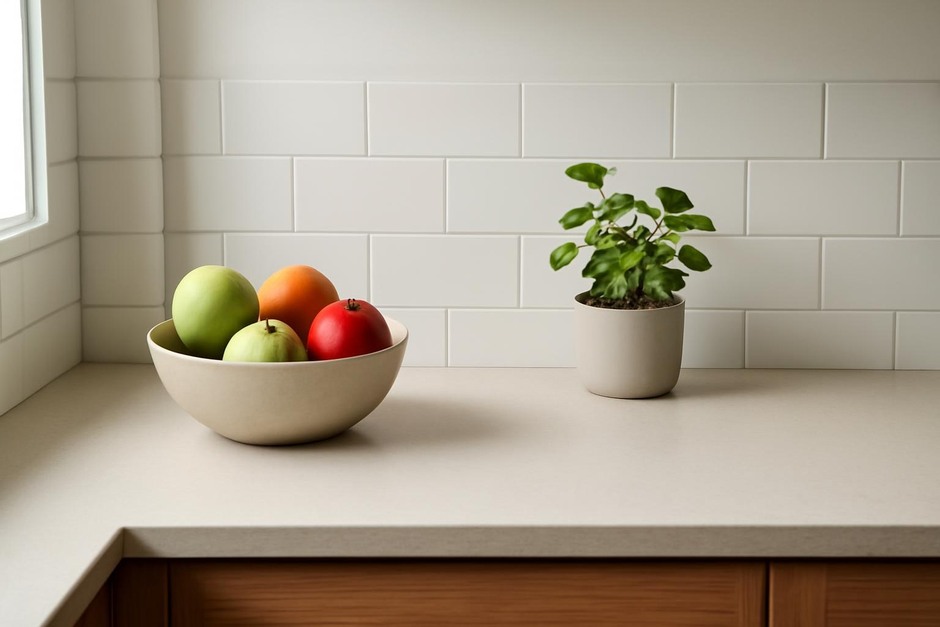
For the next three days, make it a rule that after you use the counter, you return it to a state with only one designated object on it — for example, a fruit bowl or a cutting board. Choose an object that is both attractive and functional. Each time the counter becomes cluttered, put items back in their places or into the box you kept from Experiment 1. Keep a small notepad near the sink and note each time the rule is broken. These notes are data, not judgment.
-
Experiment 3 — A Home for Frequently Used Items
Goal: Reduce friction by giving common things quick, obvious homes.
Take the next items that tend to linger on the counter and give each one a clear, visible home: a small tray for keys and loose change, a jar for cooking utensils, a hook for dish towels. The principle is proximity: homes should be near where the object is used and require minimal effort to return. Test the home for a week. If something repeatedly sits outside its home, move the home closer to the point of use or reconsider whether it should be kept on the counter at all.
-
Experiment 4 — The 90-Second Reset
Goal: Build a fast end-of-day ritual that maintains the habit.
Set an alarm for the time you usually finish dinner or the last task in the kitchen. When it rings, spend 90 seconds wiping crumbs, stacking any dishes that need stacking, and returning tools to their homes. Use a single cloth or sponge kept in the same spot so you don’t hunt for supplies. This short ritual prevents small messes from becoming obstacles. After one week, notice whether the counter feels more usable in the morning.
-
Experiment 5 — The Seasonal Audit
Goal: Build a slow, recurring check that adapts the counter to changing needs.
At the start of each month, spend 20 minutes auditing the surface. Open the “decide later” box from Experiment 1 and remove items you haven’t used in a month. Rearrange homes as seasons or routines change — for example, move cold-weather mugs to an accessible spot in autumn, then tuck them away in spring. The monthly rhythm keeps the system responsive and prevents accumulation of nonessential objects.
Principles to carry forward
Three small principles make these experiments effective: low friction (homes that are easy to use), visible decisions (a single box for undecided items), and short rituals (90 seconds to reset). The counter becomes less a place to store things and more a workspace that supports what you do most often.
If an experiment doesn’t fit your kitchen or life, adapt the timing or the object choices. The aim is not a photo-ready surface, but a counter that reliably helps you cook, prepare, and clear away with less friction. Over time these small experiments build a simple skill: noticing clutter early and addressing it with a quick, sensible action.